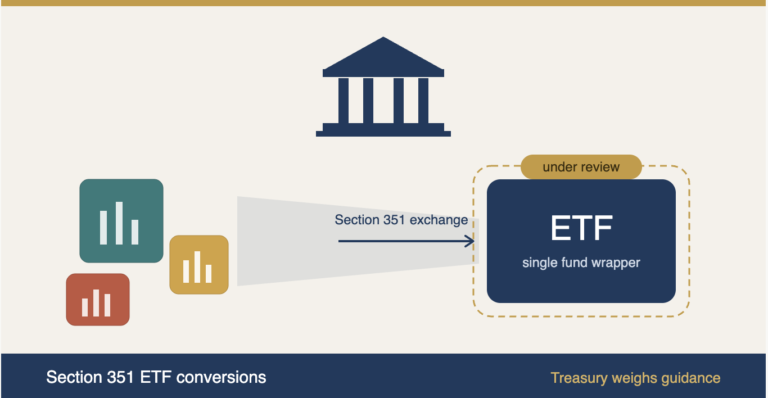


On May 5, 2026 the IRS issued Revenue Procedure 2026-21, reinstating what is known as the significant issue ruling program. It applies to corporate transactions including those under Section 351.
The short version. Before this update, if a sponsor wanted IRS comfort on a 351 transaction it generally had to ask the Service to bless the entire deal. Slow and expensive. Under the new procedure a taxpayer can isolate one specific legal question and ask the IRS to rule only on that.
For most 351 ETF launches this does not change much. The rules that matter for an in kind contribution into a registered fund are well settled. The 80 percent investment company test, the 25 and 50 diversification limits, and the basic mechanics of a multi contributor seed are all areas where competent tax counsel can opine without the IRS.
Where the new procedure could matter is at the edges. A sponsor launching a fund with an unusual asset mix, a novel security type, or a contribution structure that does not fit cleanly into existing precedent now has a faster way to get the Service on record. Instead of building a full ruling request, the sponsor frames one narrow question. The IRS itself cites basis treatment under Section 358 as an example.
A few practical notes. The issue must be germane, narrow, and genuinely uncertain. The Service will not entertain comfort rulings on settled law. The taxpayer still has to represent that the rest of the transaction qualifies under 351. And the Service can decline to rule, or rule adversely on related issues, if it chooses.
For standard 351 ETF launches this is regulatory housekeeping. For sponsors pushing into newer territory it is a useful tool that was not on the table a month ago.