
On September 28, 2026, the IRS released Rev. Rul. 2026-20 alongside Notice 2026-62. The ruling addresses one specific Section 351 ETF pattern. It does not target Section 351 seeding broadly. Here is a full summary of the ruling.
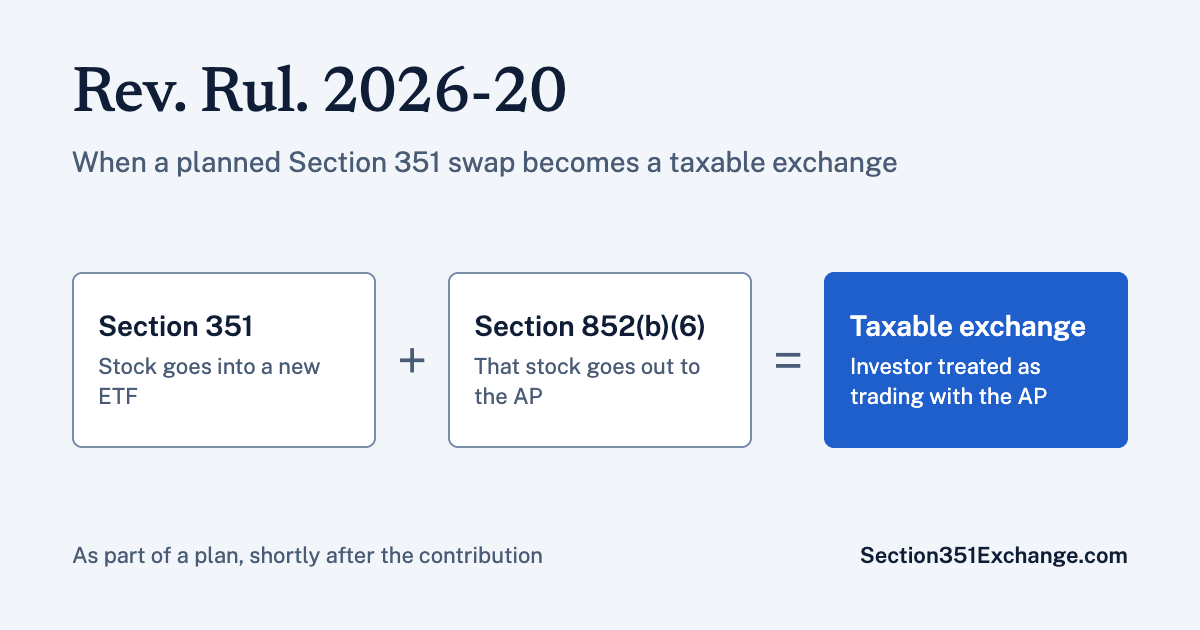
The pattern is a planned swap. An investor contributes stock to a new ETF. Shortly after, the fund sends that stock out to an authorized participant (AP) through a Section 852(b)(6) redemption. The IRS treats that as a taxable exchange for the investor.
The notice also covers five other fund strategies. I focus here on the 351 ruling, the only piece with a formal holding.
What Rev. Rul. 2026-20 says
The ruling covers one set of facts, all part of a single plan.
- An investor contributes an appreciated portfolio that passes the 25/50 test to a new ETF.
- The ETF issues shares to an AP for securities that fit its investment thesis, or for cash to buy them.
- Shortly after, the ETF redeems those shares by handing the AP the investor’s securities under Section 852(b)(6).
- The ETF ends up with a portfolio materially different from what the investor contributed.
Applying the substance over form and step transaction doctrines, the IRS concludes the ETF was merely a conduit. The investor is treated as making a taxable Section 1001 exchange directly with the AP for the securities used in that redemption. The result is the same with multiple investors.
The ruling rests on decades of case law, including Court Holding and Kuper, and amplifies Rev. Rul. 71-336.
What the IRS did not address
Notice 2026-62 expresses no view on two things.
- Seeding a new ETF with assets that fit its investment thesis and that the fund intends and expects to keep, absent a substantial change in circumstances.
- Routine ETF redemptions under Section 852(b)(6), outside the specific strategies the notice describes.
Silence is not approval. It does show where the IRS is drawing the line. IRS and Treasury officials signaled a similar line at a Wall Street Tax Association meeting in July (K&L Gates summary). The practical takeaway for sponsors is to accept only holdings that fit the fund’s strategy and that the fund plans to keep.
Open questions
The ruling leaves three key terms undefined.
- “Shortly.” The ruling does not say how soon a redemption must follow the contribution.
- “Materially different.” There is no threshold for how much the portfolio must change.
- “Consistent with the investment thesis.” Neither document says how closely each holding must fit.
Timing matters too. The ruling has no effective date, so the IRS can apply it to transactions already done. The notice adds that future guidance could apply retroactively, and it raises possible transaction of interest or listed transaction designations. Treasury and the IRS say they are considering more guidance on 351 conversions.
Questions to review before a Section 351 exchange
I expect sponsors, advisors and tax counsel to focus on these questions.
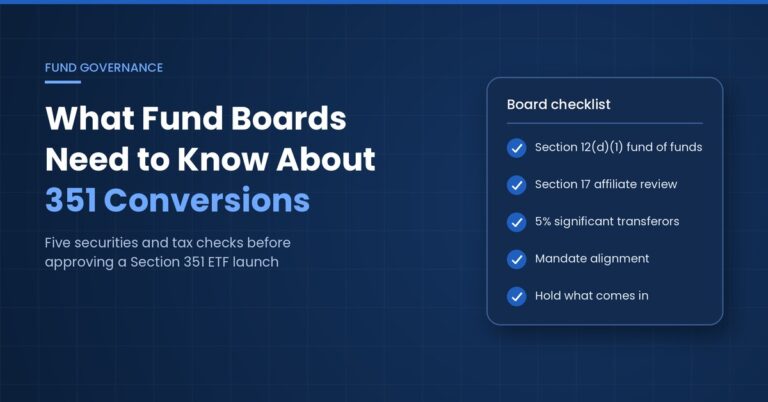
- Does each contributed holding fit the fund’s stated strategy and target portfolio?
- Is any position overweight compared with what the fund plans to hold?
- Does the sponsor intend and expect to keep what it accepts?
- Were the contribution and any later redemptions planned together?
- If a contributed holding leaves the fund, is the reason tied to a substantial change in circumstances?
Clear intake screens and good records are likely to matter more now.
How to comment on Notice 2026-62
Comments are due October 28, 2026. Submit them at regulations.gov under docket IRS-2026-1255, with Notice 2026-62 in the subject line.
Treasury and the IRS are asking which similar-looking transactions deserve different treatment and how to scope guidance without disrupting established practice.
This is not tax or legal advice. Talk to your own tax counsel about any specific deal.