In the high-stakes world of corporate tax strategy, practitioners often assume that if you follow the literal math of a regulation, you’re safe. The recent Tax Court decision in SIH Partners v. Commissioner proves that while the math matters, the underlying intent matters just as much.
The case involved a sophisticated dividend arbitrage transaction. The taxpayer, SIH Partners, perfectly engineered a portfolio swap involving Swiss equities to hit a 64.38% overlap, successfully staying beneath a strict 70% regulatory threshold. When the IRS tried to use a sweeping, common-law “substance-over-form” argument to blow up the trade, the court stopped them cold. The judge insisted that tax avoidance alone doesn’t nullify a Code-compliant transaction—both the IRS and the taxpayer must respect the regulatory text as written.
However, the taxpayer still lost the war. While they survived the mechanical safe harbor, the court nailed them on a specific, written anti-abuse rule tucked inside the regulation. Because the transaction was designed to harvest over $25 million in tax savings with virtually no realistic pre-tax profit, the court retroactively stripped the taxpayer of over $170 million in qualified dividend income and $25 million in foreign tax credits.
Navigating Section 351 ETF Seeding
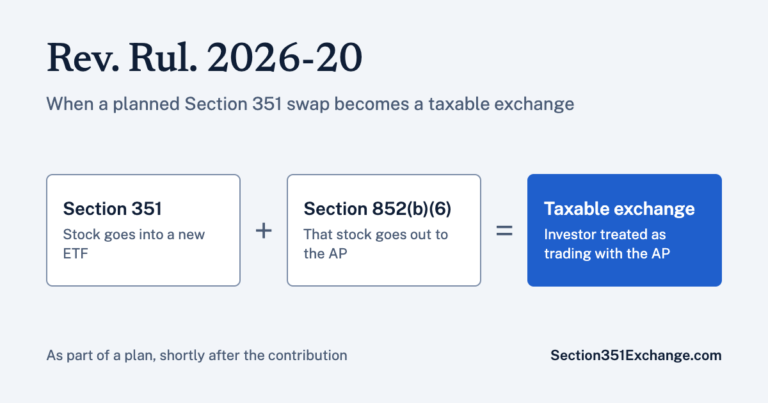
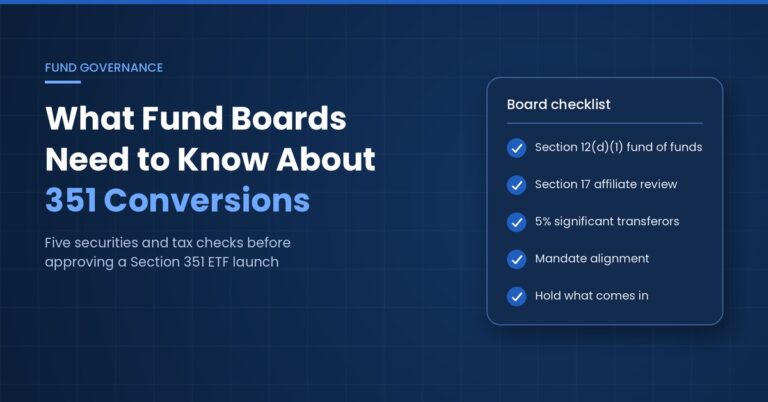
For wealth managers utilizing Section 351 to execute tax-free ETF conversions, SIH Partners is surprisingly good news in the short term. The court’s refusal to let the IRS invent broad, sweeping exceptions means that unless there is an explicit rule against it, technically compliant Section 351 transactions remain legally grounded. Today, Section 351 and its related diversification rules lack the specific anti-abuse catchall that sank SIH Partners.
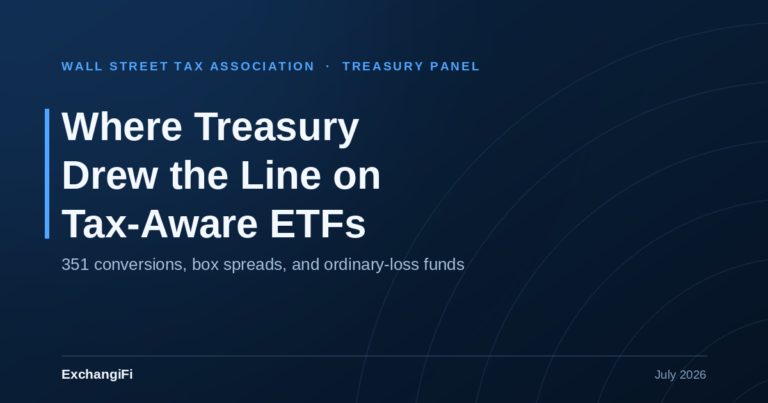
However, Treasury is watching the booming ETF seeding industry closely. Because Congress is unlikely to act, Treasury will likely use the SIH Partners outcome as a template to draft narrowly focused anti-abuse regulations for Section 351. Rather than banning all in-kind ETF seeding, they will target the abusive edge cases.
Going forward, the IRS is expected to crack down on transactions exhibiting specific bad behaviors: overly aggressive marketing pitches that promise synthetic tax avoidance, pre-determined plans to drastically flip investment strategies immediately after the transfer, or the use of artificial pooling vehicles designed solely to manipulate Section 351 diversification requirements.
To survive this evolving regulatory landscape, a Section 351 ETF transfer can no longer rely solely on passing a spreadsheet test. It must be built on genuine economic substance, featuring well-documented, pre-transaction analyses that prove a legitimate business purpose beyond just skipping the tax bill.