

Understanding IRS Revenue Ruling 2026-20 and Section 351 ETF Conversions
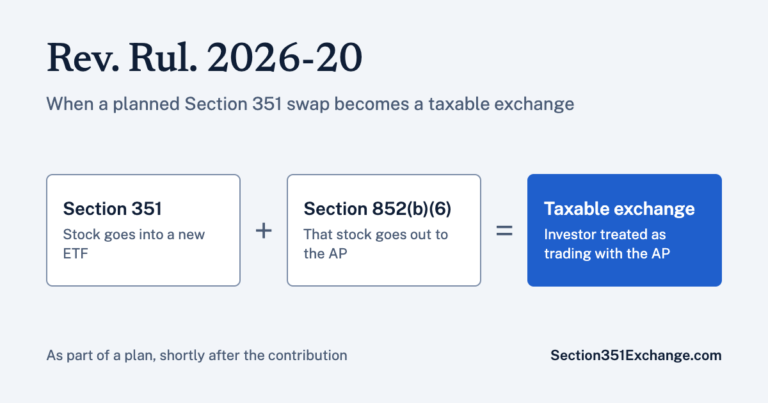
What is IRS Revenue Ruling 2026-20? IRS Revenue Ruling 2026-20 and Notice 2026-62 address the application of Section 351 of the Internal Revenue Code to specific ETF conversion transactions. The ruling targets “disguised swaps”—instances where an investor uses an ETF as a temporary conduit to exchange a highly concentrated, appreciated stock position for a diversified portfolio without immediately recognizing capital gains.
Watch the technical video overview below to understand the mechanics of this ruling, how the IRS applies the substance-over-form doctrine, and the requirements for maintaining a legitimate tax deferral.
Key Takeaways:
- The Step-Transaction Doctrine: The IRS will recharacterize prearranged, in-kind redemptions involving an Authorized Participant (AP) and an investor’s original securities as a taxable Section 1001 exchange directly between the two parties.
- Tax Liability: In disallowed transactions, the built-in capital gains tax liability falls directly on the individual investor in the year of the exchange.
- Disclosure Requirements: Notice 2026-62 warns these may become “listed transactions.” Failure to properly disclose them on Form 8886 carries strict financial penalties and audit risks.
- Legitimate Section 351 Transfers: Conventional ETF creation and seeding remain valid, provided the fund has a genuine economic intent to hold the assets and the contributed securities align with the actual investment strategy.
Disclaimer: This material is provided for informational purposes only and does not constitute tax, legal, or financial advice. Always consult qualified tax counsel before executing Section 351 transfers.